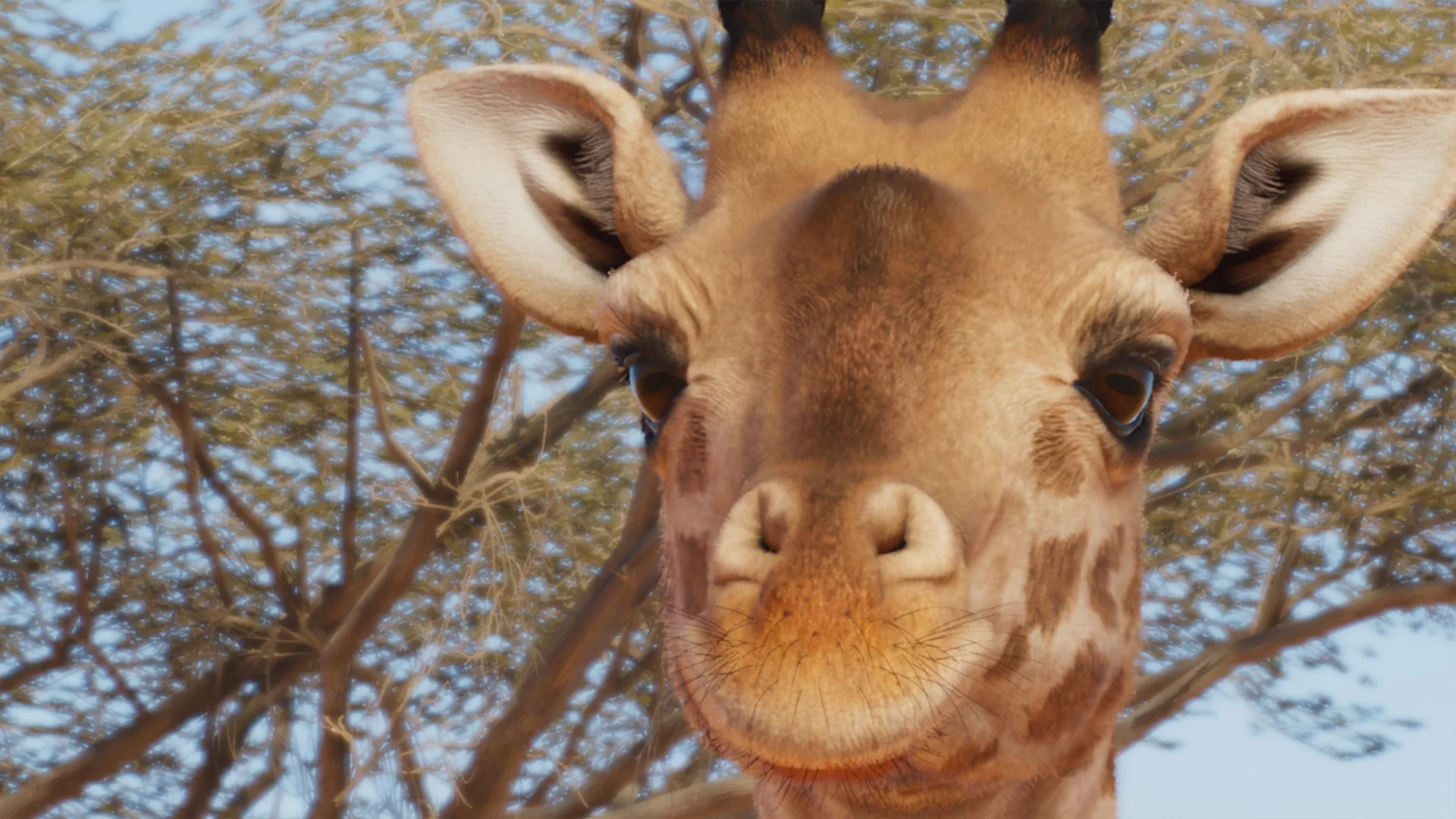
Giraffa tippelskirchi
About
General
The Masai giraffe is a species of giraffe that lives in the savannahs and open forests of Kenya, Tanzania and Uganda. The Masai giraffe is distinguished from other giraffe species through its spiky, leaf-shaped spots in dark brown to red colours divided by pale yellow interconnecting lines. Males have well-developed bony horns (ossicones) on their head, while the horns of the female are smaller and thinner. Masai giraffes are extremely tall, with their characteristic long neck: males measure an average of 5.4m, and up to 5.8m, tall and weigh an average of 1,200kg and up to 1,300kg. Females measure 4.7m on average and weigh 800kg.
Conservation Status
The Masai giraffe is Endangered. Over the past 30 years, populations have declined by more than 50% due to habitat loss, agricultural expansion, human-wildlife conflict, and poaching for meat, hide, and traditional medicine. Giraffes lose access to critical feeding and breeding areas due to human expansion, and political instability and insufficient enforcement of wildlife laws in parts of their range have made anti-poaching efforts more difficult. Despite these challenges, there have been notable conservation successes. Some initiatives led by NGOs and national wildlife agencies have improved monitoring, protection, and community engagement. Enhanced understanding of movement patterns via GPS tracking and population surveys have improved habitat management, and reintroductions into protected areas have bolstered local population numbers. Additionally, the growth of community conservancies and eco-tourism has provided economic incentives for local communities to support conservation efforts.
Social & Reproduction
Masai giraffes live in fluid, fission-fusion social groups, meaning individuals frequently join or leave groups without developing strong bonds, and group composition changes regularly. These groups are often based on age, sex, or kinship. Females and their calves form loose associations, while males may be solitary or form temporary bachelor groups. Masai giraffes mate year-round. Mature, solitary males approach female herds and sample their urine for signs of oestrus. Courtship includes fighting rival males and nuzzling the females until they allow him to mate. Giraffes are pregnant for 13 to 15 months. Shortly before birth, a mother separates herself from her herd. She gives birth to one calf, though twins have occasionally been recorded, which drops 1.5m to the ground and can walk within an hour of being born. She keeps the calf hidden away in bushes, foraging alone, until it is about 3 weeks old. Then, mother and calf rejoin the herd. Giraffes begin eating solid food from 1 month old, though weaning is gradual and complete at 1 year old at the latest. Calves are closely bonded to their mother until they are around 18 months old, when they will begin to distance themselves. Giraffes reach sexual maturity at around 4 years old. Young males leave their natal herd at 3 years old to join a bachelor herd, gradually becoming more solitary until they roam fully alone by around 7 years old. Females tend to remain with their mother's herds, but may transfer to other herds occasionally through their lives.
Habitat
Social
Biology
 5.8 m
5.8 m 4.7 m 1300 kg 800 kg