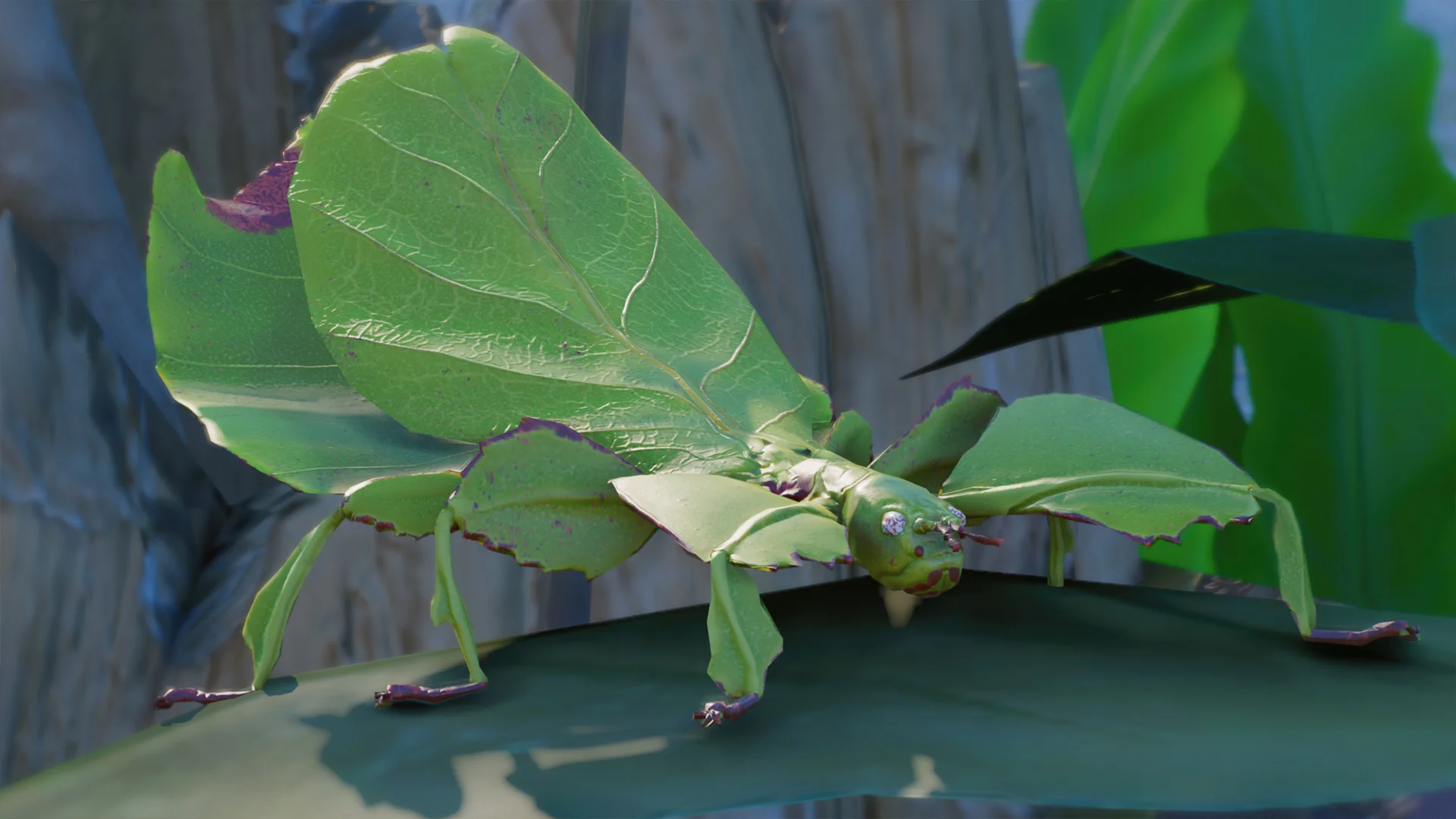
Pulchriphyllium giganteum
About
General
The giant Malaysian leaf insect is a large species of insect that lives in the Western tropical rainforests of Malaysia. This species exhibits extraordinary camouflage. As its name suggests, it has evolved to blend in with the leaves of the trees in which it lives. Females are 12cm in length, broad and flat in appearance and have small vestigial wings that do not allow them to fly. Males are approximately 9cm in length and much more slender. Males also have long wings and can fly.
Conservation Status
The conservation status of the giant Malaysian leaf insect has not been formally assessed. Their population trend is not known, nor are there any specific conservation concerns. This insect is popular in the pet trade, but relative ease of captive breeding makes it unlikely that collection for the pet trade is a strong risk. Due to their dependence on thick vegetation for camouflage and feeding, they may be affected by habitat loss where deforestation occurs within their range. The giant Malaysian leaf insects' range may overlap with established protected areas in Malaysia, and they may benefit from conservation actions targeting general habitat preservation or restoration, but otherwise there are no targeted conservation initiatives focused on this species. Further research into this insect's range, behaviour and ecology would be required to assess and formulate conservation plans.
Social & Reproduction
These insects are solitary but very passive, so can be kept together. They should not be kept with other large herbivorous insects because they could be eaten due to their lack of movement and leaf-like appearance. Mating habits of the giant Malaysian leaf insect are little known because the males have been so rarely observed, much of this information is based on other species in the Phyllium genus. Giant Malaysian leaf insects can breed year-round. Males will search for females when in flight. When a receptive female is found, he will land and mate with her. However, females are parthenogenetic, meaning they can lay viable eggs without needing to mate if no male is available. The female leaf insect lays approximately 40 eggs buried in the ground. Fertilised eggs are laid in the same way as unfertilised eggs, at a rate of 1 or 2 per day. Eggs hatch 6 to 9 months later. The young will go through approximately 1 moult per month until they are fully grown. Male young will go through 6 moults, females will go through 7. Females reach sexual maturity at 8 months old.
Habitat
Social
Biology
 9 cm
9 cm 12 cm
12 cm