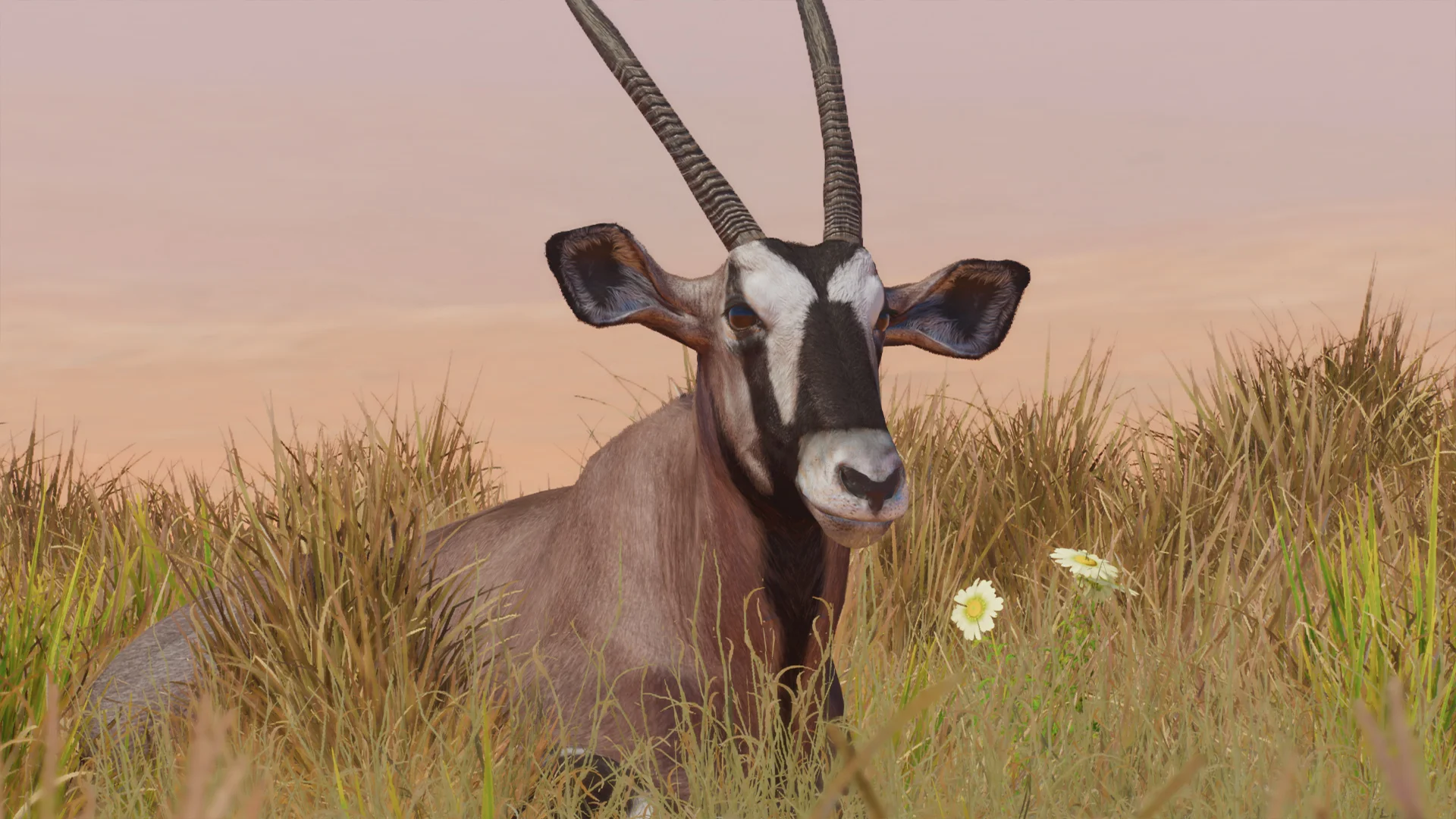
Oryx gazella
About
General
The gemsbok is a species of antelope, also sometimes called the South African oryx, that lives in the Kalahari and Namib deserts of Southern Africa. They are characterised by several visual features: long, slim and spiral horns, a black face with white markings over the eyes and muzzle, a grey-brown coat with black markings on the upper legs and back, as well as white socks. On average, Gemsbok stand between 1.1m and 1.3m tall at the shoulder, measure 1.9m to 2.4m long and have an average horn length of 85cm. The males are also slightly larger and significantly heavier at 220kg to 300kg than the females at 100kg to 210kg.
Conservation Status
The gemsbok is listed as Least Concern, but like many other species still faces challenges from habitat loss and climate change. Human urban and agricultural expansion, as well as increased livestock grazing reduce the amount of intact savannah and arid grassland needed for foraging and seasonal migration. This fragmentation isolates groups and increases competition with domestic animals for more limited resources. These resources are further impacted by prolonged droughts and climate change. Unsustainable hunting and poaching for meat and trophies may also cause local declines. Conservation focuses on safeguarding habitats and reducing human-wildlife conflicts. Newly established wildlife corridors link reserves so gemsbok can access diverse grazing areas and water sources throughout seasonal cycles. Eco-tourism initiatives help provide incentives for local communities to support wildlife protection, and anti-poaching measures coupled with education campaigns reduce illegal hunting pressure. Additionally, translocations onto private game ranches have increased subpopulations in some areas.
Social & Reproduction
A herd of Gemsbok numbers between 10 and 30. The females group together in interrelated herds with their young offspring, usually consisting of one dominant territorial male who joins the females for mating purposes. Young males form together into single sex bachelor herds until they are old enough to maintain their own territory and acquire a herd of females. Mature male gemsbok maintain a large territory, wherein they will gather 'harems' from the female groups that forage through it. The dominant male joins these groups, defending them from rival males and mating with receptive females. Gemsbok can mate year-round, and females in a herd are usually receptive around the same time. A gemsbok's pregnancy lasts 8.5 months, after which a mother will give birth to one calf in solitude, away from the herd. The newborn will remain hidden in the bushland for the first 6 weeks. The calf will then rejoin the herd and begin to eat solid food, before weaning at 3.5 months-old and becoming independent around a month later. Calves reach sexual maturity at 2 years-old; the males leaving their natal herd to join an all-male bachelor group until they are old enough to maintain their own territory, usually from 5 years old onward, while the females remain with their mother's herd.
Habitat
Social
Biology
 2.15 m
 2.15 m 260 kg 155 kg