Orycteropus afer
About
General
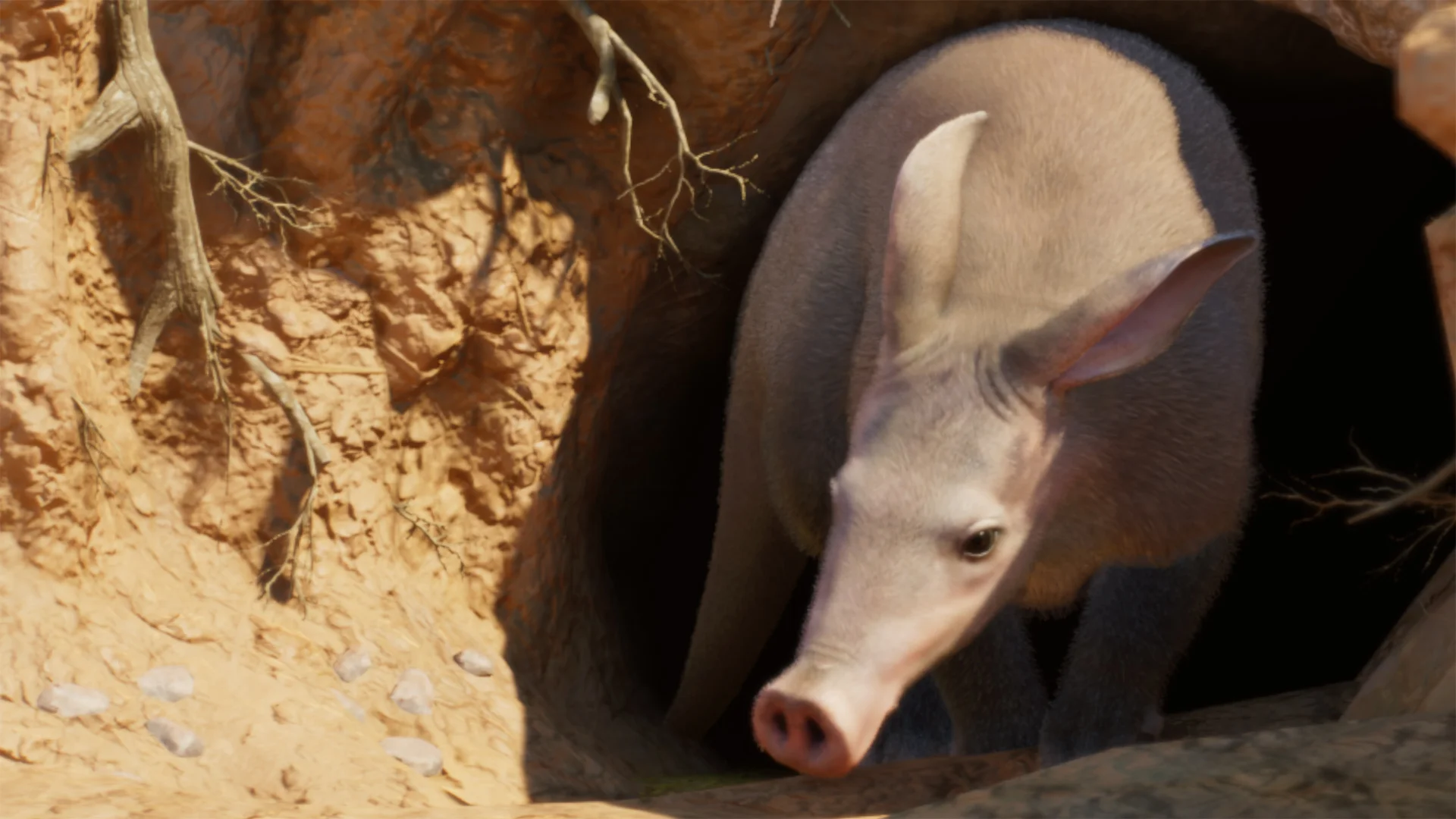
The aardvark is a medium-sized insectivore that lives throughout Sub-Saharan Africa. They have pink-grey skin with sparse, coarse hair, large slender ears, and an elongated head that ends in a pig-like snout. Males are slightly larger than females, but both sexes are generally between 105cm and 130cm long, have a tail between 60cm and 70cm, and weigh between 40kg and 65kg.
Conservation Status
The aardvark is not endangered, but it is vulnerable in certain areas. They need a large foraging range in the wild to allow them to acquire enough food, so they are affected by land use change like the expansion of farmland and urban areas. Sometimes they are killed by farmers who want to prevent them from digging up their land, and they are also affected by pesticides that kill the insects they feed on. Ant and termite populations are also negatively affected by more frequent, climate change-induced droughts. Aardvarks are protected in national parks and nature reserves.
Social & Reproduction
With the exception of a mother and her cub, aardvarks are solitary in nature. They only interact when mating or competing over mates. During the mating season, male aardvarks will track females in their burrows by scent and stay with them for a few days. If and when she is receptive, he will mate with her before leaving the burrow. Males may mate with several females during the mating season. The female is pregnant for 7 months before giving birth to 1 cub, which will remain with its mother for 6 months before leaving and digging its own. They become sexually mature at 2 years old.
Habitat
Social
Biology
 1.3 m
1.3 m 1.3 m 65 kg 65 kg