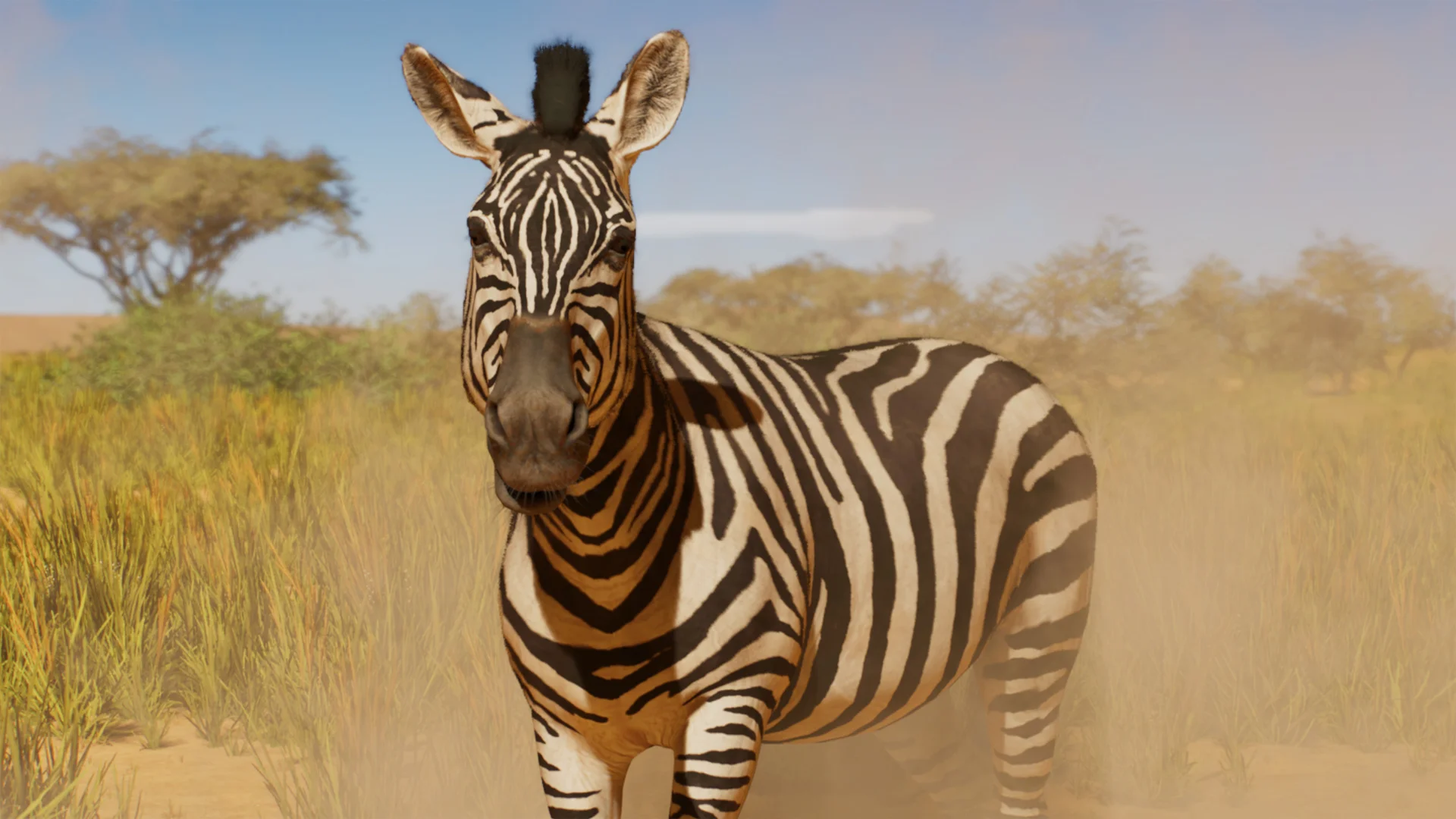
Equus quagga
About
General
The plains zebra (Equus quagga) is native to Eastern and Southern Africa, preferring savannahs within easy reach of water. The species is divided into six subspecies, distinguished mainly by varying stripe patterns and lack of interbreeding. Plains zebras have the iconic black and white stripes of all zebras, and are intermediate in size between the larger Grévy's zebra and smaller mountain zebra. Both sexes stand 1.10–1.45m tall and measure 2.17–2.46m in length, with males generally 10% larger and heavier at 220–320kg compared to females at 175–250kg.
Conservation Status
Plains zebras are Near Threatened, facing habitat fragmentation, competition with livestock for grazing, and poaching for skins and meat. Although more adaptable than other zebra species, localised population declines have occurred — one subspecies, the quagga, was hunted to extinction in 1878. Conservation efforts focus on habitat protection, anti-poaching, and sustainable land-use planning. Many zebras are protected within national parks, though their migratory nature takes them beyond protected boundaries. Translocation and reintroduction programmes have bolstered declining populations, and organisations such as the IUCN and WWF provide research and funding support.
Social & Reproduction
Plains zebras live in cohesive herds made up of several harems, each consisting of one stallion, several mares, and their young. Young males without a harem form bachelor herds. Within a harem, mares maintain a hierarchy based on seniority with the stallion. A male acquires a mate by challenging and subduing her father when she first reaches sexual maturity; the stallion who first mates with her becomes her permanent partner. Females are pregnant for 12–14 months and give birth to a single foal. Female foals remain with their natal herd until joining an unrelated male; male foals leave when their mother has another foal, joining a bachelor herd.
Habitat
Social
Biology
 1.45 m
 2.46 m 320 kg 250 kg