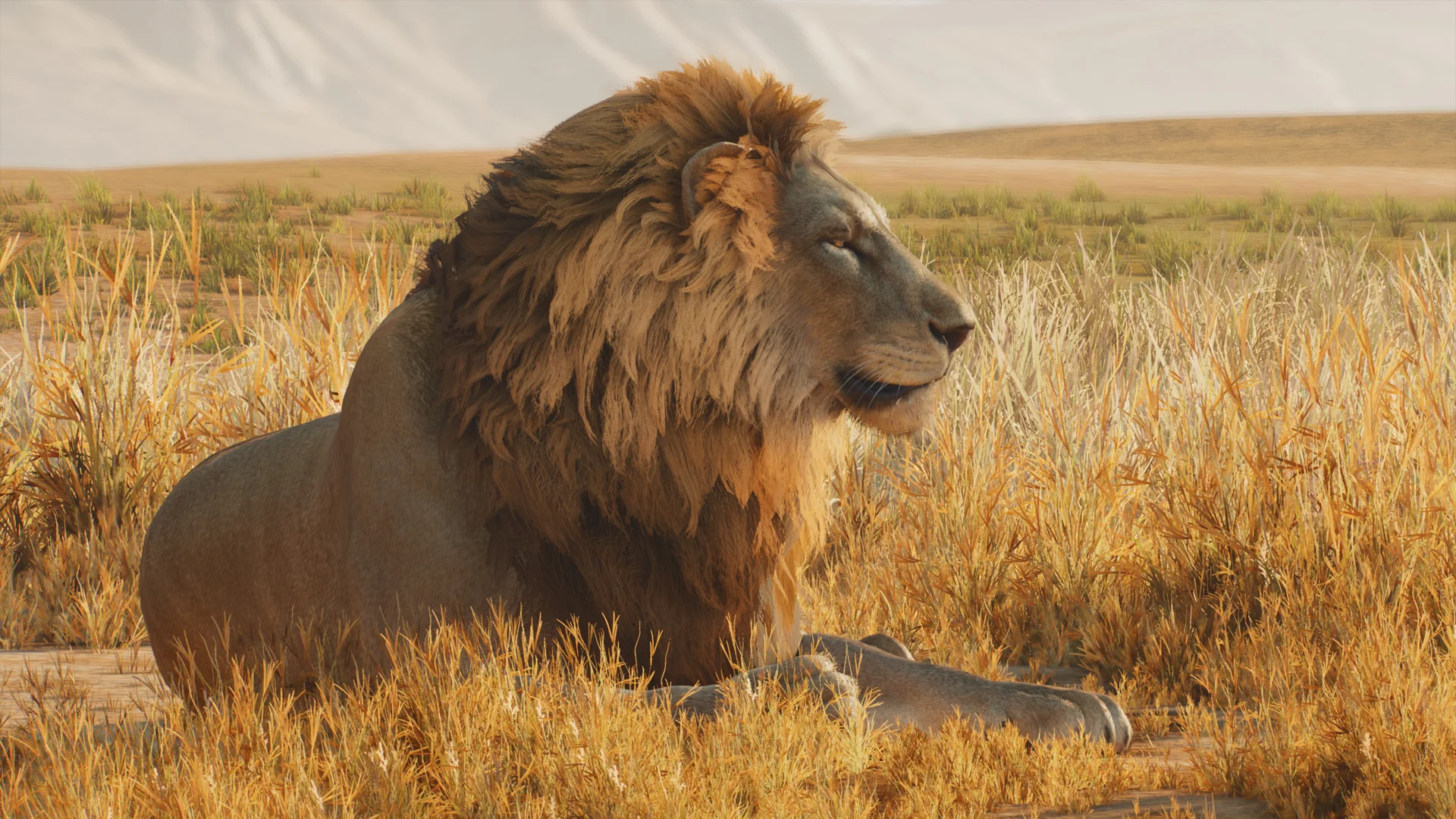
Panthera leo
About
General
The lion (Panthera leo) inhabits savannahs, grasslands, and open woodlands across sub-Saharan Africa, with a small surviving population in Western India. Males are recognisable by their thick manes, ranging from blond to black, which provide protection during fights and signal dominance. Females are maneless and more slender for hunting agility. Both sexes are tan to sandy yellow with a paler belly. Males measure 1.7–2.5m in body length and weigh 150–250kg; females are smaller at 1.4–1.8m and 110–180kg.
Conservation Status
Lions are Vulnerable, facing habitat loss and fragmentation from urban and agricultural expansion, retaliatory killing due to livestock predation, poaching for trophies and traditional medicine, and declining prey availability. Climate change further alters habitats and water sources. Conservation measures include protected areas, wildlife corridors connecting fragmented habitats, livestock compensation and fencing schemes, community-based conservation programmes, and lion-based ecotourism. International trade in lion products is strictly regulated, with NGOs and governments cooperating on anti-poaching efforts.
Social & Reproduction
Lions are social, living in prides of related females and their young alongside a dominant male and one or two subordinates. Young males without a pride often form small bachelor coalitions. Lions breed year-round; the dominant male mates with all receptive females, though lionesses in heat may also mate with multiple males. After a 3.5-month pregnancy, females give birth to 2–3 cubs in a den, introducing them to the pride at 6–8 weeks. Cubs are weaned at 7–8 months. Sexual maturity is reached at 3–4 years. Female cubs typically remain with their mother's pride; males are expelled and must form coalitions or take over a pride, sometimes killing existing cubs to bring females back into breeding condition.
Habitat
Social
Biology
 2.1 m
2.1 m 1.6 m 200 kg 145 kg