Eretmochelys imbricata
About
General
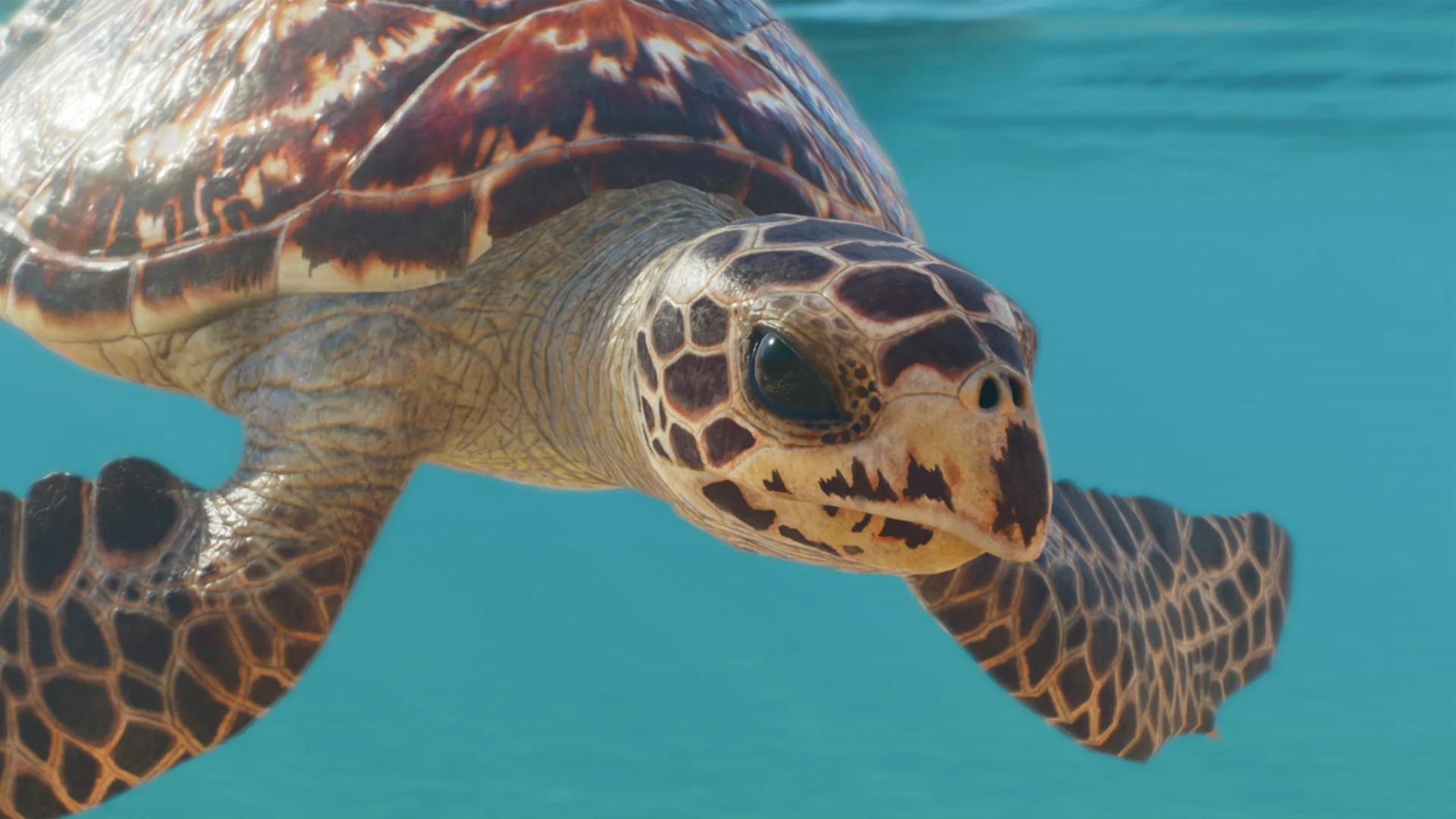
The hawksbill turtle (Eretmochelys imbricata) is a medium-sized sea turtle living in the Atlantic, Pacific, and Indian Oceans, inhabiting tropical and subtropical marine environments such as coral reefs, lagoons, and coastal areas with rocky outcrops. It has a distinctive patterned shell with overlapping, jagged-edged scales in brown and gold, often streaked with dark and light markings. Adults grow to 75–90cm in carapace length and weigh 45–70kg.
Conservation Status
Hawksbill turtles are Critically Endangered. Major threats include poaching for their distinctive shells, egg collection, coral reef degradation, climate change-driven sex imbalances through temperature-dependent sex determination, bycatch in fishing nets, and plastic ingestion. Conservation efforts include nest monitoring and relocation, head-starting programmes, beach clean-ups, turtle-friendly fishing gear, and international trade bans under CITES — though illegal trafficking continues. Eco-tourism initiatives provide alternative livelihoods in communities previously reliant on turtle products. Some populations have stabilised or increased as a result of these measures.
Social & Reproduction
Hawksbill turtles are solitary, interacting only to mate. Breeding season varies by location but typically runs from April to November, with females reproducing only every 2–5 years. Mating occurs in shallow water with multiple partners, so clutches typically have multiple fathers. Females return to their natal beaches at night to dig nests and deposit 100–200 eggs each, potentially creating over 5 nests per season. Eggs incubate in the sand for approximately 2 months; sand temperature determines hatchling sex, with warmer temperatures producing more females. Hatchlings emerge at night and instinctively head toward the brightest horizon. Juveniles spend 10–20 years drifting in open water before moving to coastal reef habitats. Sexual maturity is reached at 20–35 years.
Habitat
Social
Biology
 82 cm
82 cm 82 cm 57.5 kg 57.5 kg