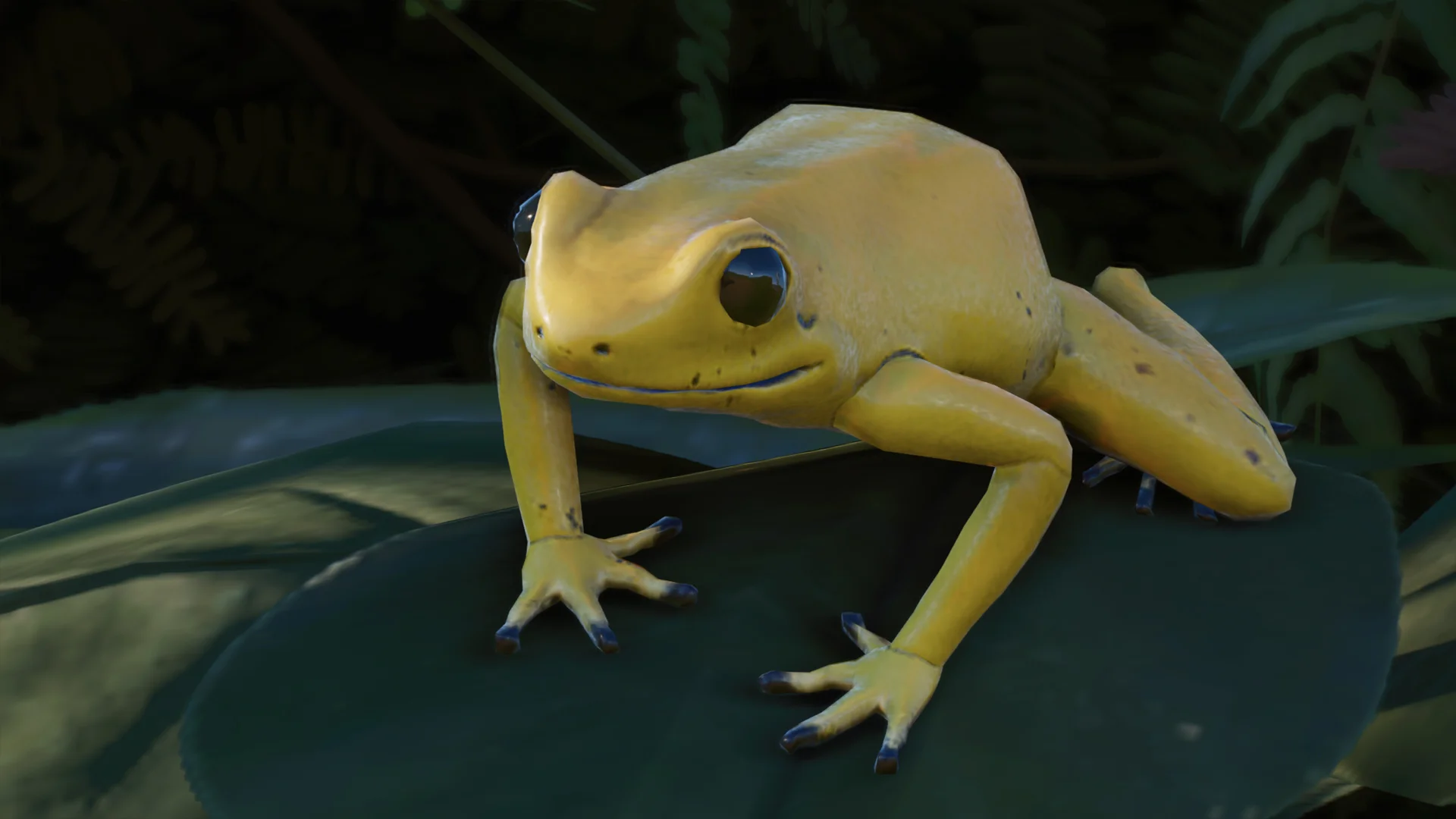
Phyllobates terribilis
About
General
The golden poison frog (Phyllobates terribilis), also known as the golden dart frog or golden poison arrow frog, is a species of poison dart frog endemic to the rainforests of the Pacific Coast of Colombia. Despite the name, they are found in mint green, yellow, and orange colour morphs. All variants have extremely poisonous skin used as a defence against predators, with their bright colouration serving as a warning signal. Unlike most frogs, they live on the forest floor and do not need to live near water, though they do require a water source to deposit their eggs. Adults average 50–55mm, with females typically larger than males.
Conservation Status
The golden poison frog is assessed as Endangered due to continued habitat loss and degradation from logging, mining, and illegal clearance for illicit crop farming, with pesticide pollution adding further pressure. They are also collected for the pet trade, though this is thought to be low in volume. Parts of their range fall within protected areas, and international trade is restricted under CITES Appendix II. The availability of captive-bred specimens has substantially reduced illegal wild collection, as captive frogs are non-toxic and safer to handle. Further habitat protection remains essential for the species' long-term survival.
Social & Reproduction
Golden poison frogs are social, living in unrelated groups of 4 to 7 individuals. They mate year-round; when females are ready to lay eggs, males attract them with high-pitched squeaks. Mating occurs in groups, with males moving between females to fertilise eggs as they are laid, then carrying the clutch on their backs to a suitable water source. Eggs hatch after 11–12 days into tadpoles, which become froglets 55–60 days later. Young frogs reach sexual maturity at 12–18 months.
Habitat
Social
Biology
 5 cm
5 cm 6 cm
6 cm