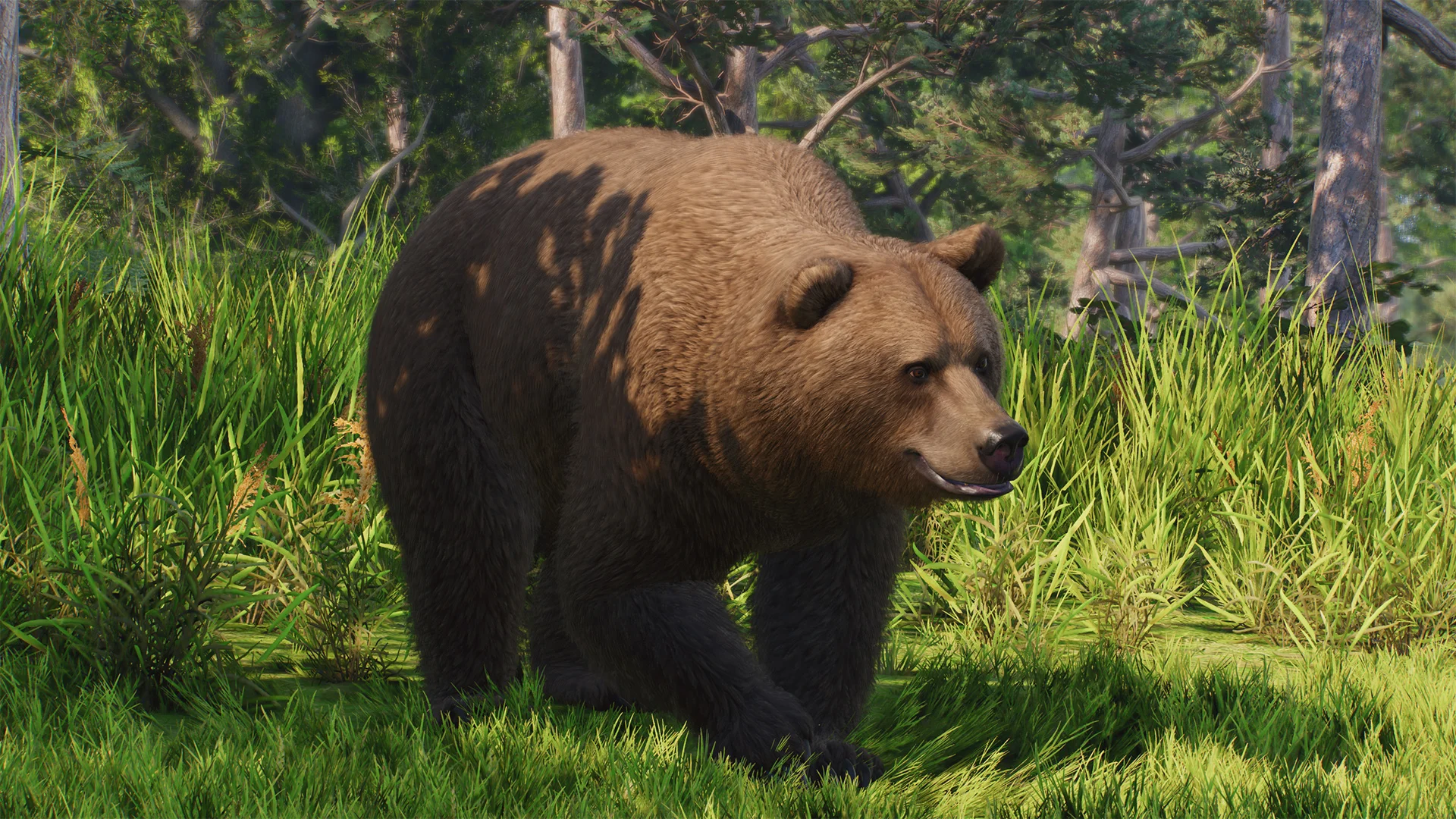
Ursus arctos arctos
About
General
The Eurasian brown bear (Ursus arctos arctos) is a subspecies of the brown bear ranging from Europe to Central Russia, inhabiting boreal and temperate forests, grasslands, and wetlands. They have thick brown fur, a large shoulder hump, a rounded head, and small rounded ears, with strong front legs and long claws used for digging and hunting. Males average 2.2m in length and weigh 350–500kg; females are smaller at 1.8m and 150–300kg, though size varies considerably between populations.
Conservation Status
While of Least Concern today, the Eurasian brown bear has lost much of its historic range due to centuries of habitat destruction, hunting, and persecution, leading to local extinctions across much of Western Europe by the early 20th century. Legal protections such as the EU Habitats Directive and the Bern Convention have laid the groundwork for recovery. Reintroduction efforts — including releases of Slovenian bears into the Pyrenees and Italy's Trentino-Alto Adige region — have resulted in successfully breeding populations expanding their range, making this one of Europe's notable large carnivore conservation successes.
Social & Reproduction
Eurasian brown bears are solitary outside of mother-cub groups, only coming together to mate or compete. Breeding occurs between May and July; males roam widely for receptive females and both sexes mate with multiple partners. Due to delayed implantation, the fertilised egg does not implant until late autumn, just before hibernation. Cubs — usually 2 or 3, but 1 to 4 in a litter — are born blind and hairless in January or February during hibernation. They remain in the den for 3–4 months before venturing out, and stay with their mother for 1.5–2.5 years. Sexual maturity is reached between 4 and 6 years of age.
Habitat
Social
Biology
 2.2 m
2.2 m 1.8 m 500 kg 300 kg