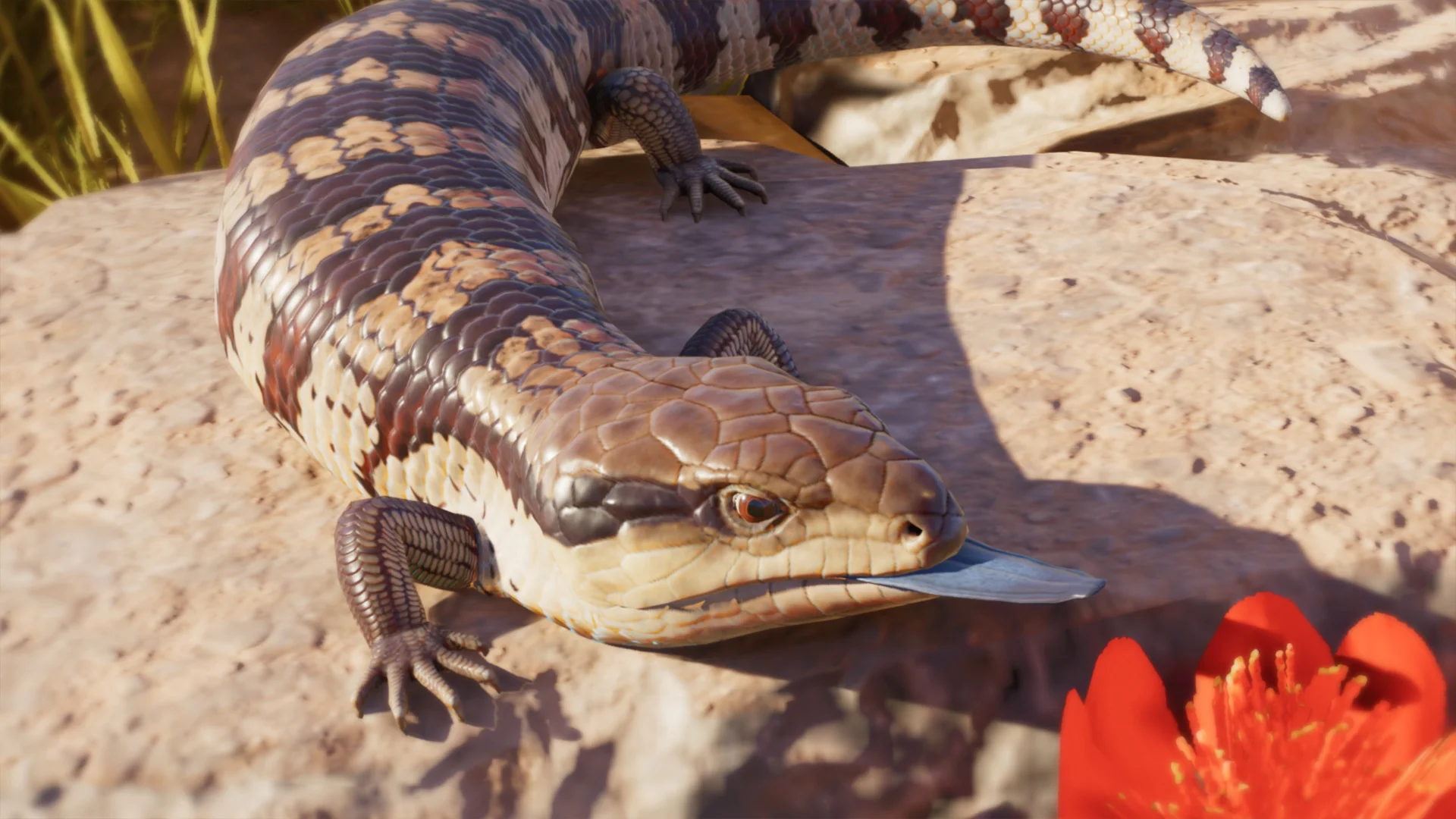
Tiliqua scincoides
About
General
The common bluetongue (Tiliqua scincoides), also called common blue-tongued lizard or blue-tongued skink, is a species of reptile living in the woodland, scrubland, and semi-desert areas of Australia. They are broad and squat with a triangular head and thick tail, typically sporting tan, beige, and black scales in a striped pattern. As their name suggests, they have a striking bright blue tongue. Adults measure 45–60cm in length and weigh 0.35–1kg.
Conservation Status
The common bluetongue is assessed as Least Concern. While urbanisation along the Australian coast degrades their natural habitat, this lizard has adapted reasonably well to altered landscapes. A significant threat is the invasive cane toad, which is poisonous and fatal when ingested. Much of the species' range falls within national parks and reserves. No targeted conservation programmes exist, though broader invasive species control would benefit them; taste aversion training has been proposed as a tool to prevent bluetongues from preying on cane toads.
Social & Reproduction
Common bluetongues are solitary, interacting only to mate or compete for mates. Males track females by scent during the September–November mating season; rival males fight aggressively, with the victor earning mating rights. Mating can be violent, and females often bear scratches as a result. Around 3–5 months after mating, females give birth to 10–15 live young, which are fully independent from birth. Sexual maturity is reached between 18 and 24 months, with full size of around 40cm achieved at approximately 3 years old.
Habitat
Social
Biology
 60 cm
60 cm 60 cm 1 kg 1 kg