Information is taken from the game and may change or differ over time. Last updated .
Statistics
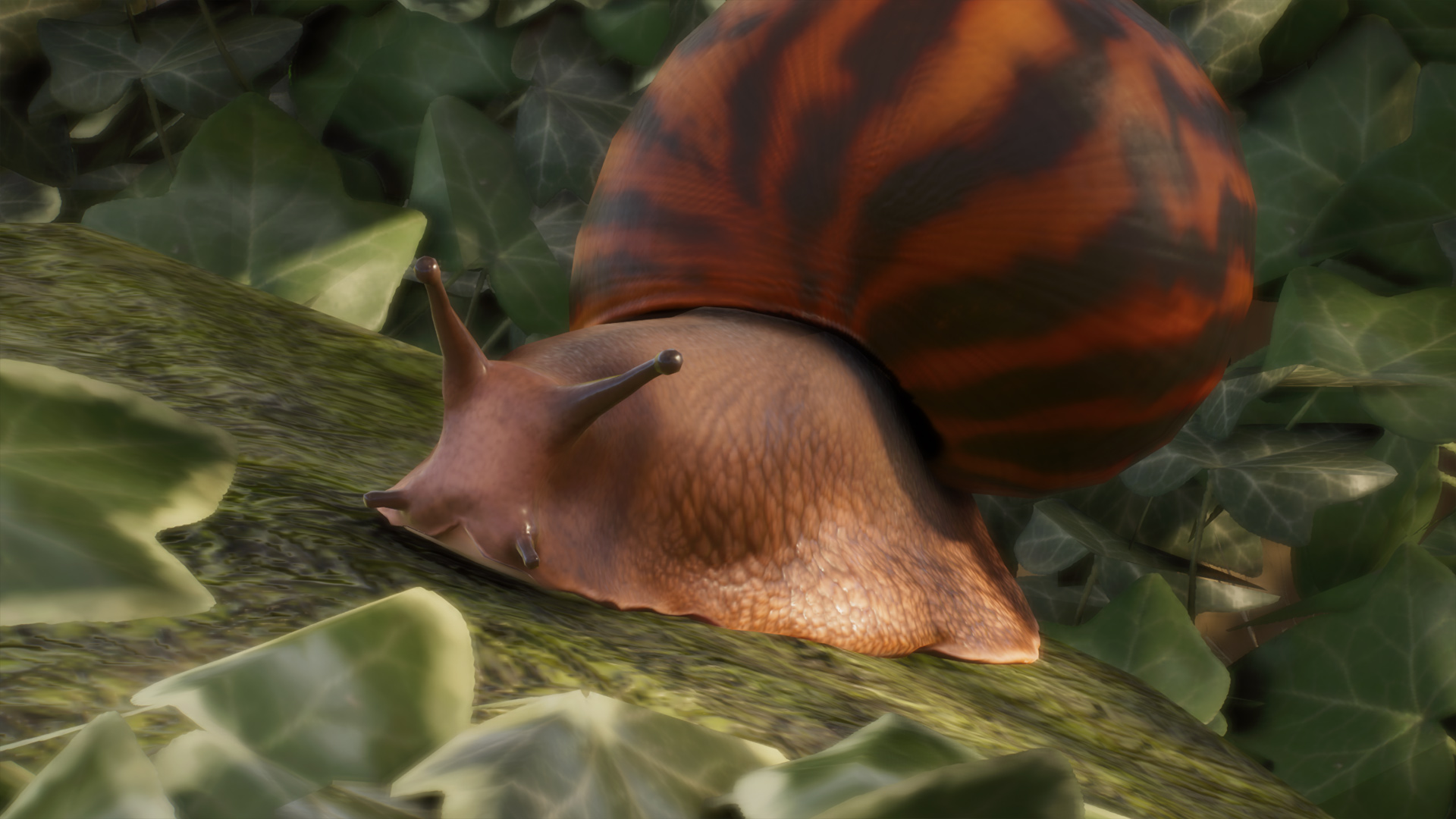
The giant tiger land snail (or Achatina achatina) is a large species of gastropod that lives in the woodland areas of West Africa; specifically Sierra Leone, Liberia, Ivory Coast, Ghana and Nigeria, among others.
They have a grey body and a conical shell that is yellow, orange or tan with black stripes – the distinctive pattern being the inspiration for their name.
The species is hermaphroditic, possessing both male and female reproductive parts, so there are no distinct 'males' and 'females'. However, small or sub-adult individuals have often not yet developed the reproductive parts and so may be considered 'males'. The largest individuals reach a length and diameter of 30cm x 15cm.
- The giant tiger land snail is the largest species of land snail in the world.
- Giant tiger land snails are threatened by habitat loss and over-hunting by humans.
- In Ghana, giant tiger land snails are considered a delicacy and are often hunted for food.
- The giant tiger land snail has been accidentally introduced to the USA and the Caribbean, where it is considered a pest.
- Giant tiger land snails have mouthparts called 'radulae' that are covered in many tiny 'teeth' used to feed by rasping them against vegetation.
Habitat
Minimum habitat requirements
Environment
Preferred group ranges
Social
Giant tiger land snails do not actively live in groups, but are passive enough to tolerate others without aggression.
Release
Conservation
The status of the giant tiger land snail has not been officially evaluated. It is widely consumed by local ethnic groups with potential for commercial farming. Along with other species of giant African snails, it is an invasive species when introduced to non-native ecosystems. Outside of its native range, this species thrives in mild climates and feeds voraciously, outcompeting native snails and spreading disease. It is also often kept as a pet.
International trade and possession of giant tiger land snails is illegal in some vulnerable countries due to its invasive potential. Eradication campaigns have been managed successfully in some countries, but repeat invasions are presumed through cargo and accidental releases.
The giant tiger land snail is highly abundant, and the eradication of the species from its introduced range is the main conservation concern.
Research
| Level | Unlocks | Bonus | Research gate |
|---|---|---|---|
| 1 | Fertility Level 1 | Fertility (+15%) | |
| 2 | Giant Tiger Land Snail Fact Sheet | ||
| 3 | Release groups and release to the wild | ||
| 4 | Fertility Level 2 | Fertility (+30%) |
Conservation topics
Life
Reproduction
Lifecycle
Body
 28 cm
 28 cm
Breeding
Breeding typically occurs before the rainy season but only occurs once every 3 years. When interested in mating, a snail will approach another and see if they reciprocate interest by touching them with their antennae. As snails are hermaphroditic, the larger individual takes on the role of the female, with the two entwining while mating for fertilisation to take place. The female will then dig a shallow nest in the forest floor in which to lay her eggs.
After 10 to 31 days, these hatch – usually just as the rainy season begins – and the young snails must feed to become larger and strengthen their shells before the dry season hits.
Giant tiger land snails reach sexual maturity as males at 2 years old, and at this point they are able to fertilise a female. However, it may take up to 3 years for them to be mature enough to act as the female. A fully mature snail will be able to take on the role of either the male or female in copulation. Self-fertilisation is also possible.